
In a podcast interview, I was recently asked what sales technique was most effective in building my agency, Anvil, for maximum valuation. I answered: “I’d say networking on LinkedIn.” I went on to describe my sales philosophy and how I applied it on LinkedIn. By the end of the interview, I realized I needed to get my process on paper for future reference. This article is meant to capture and distill my best practices for growing business via LinkedIn sales strategies.
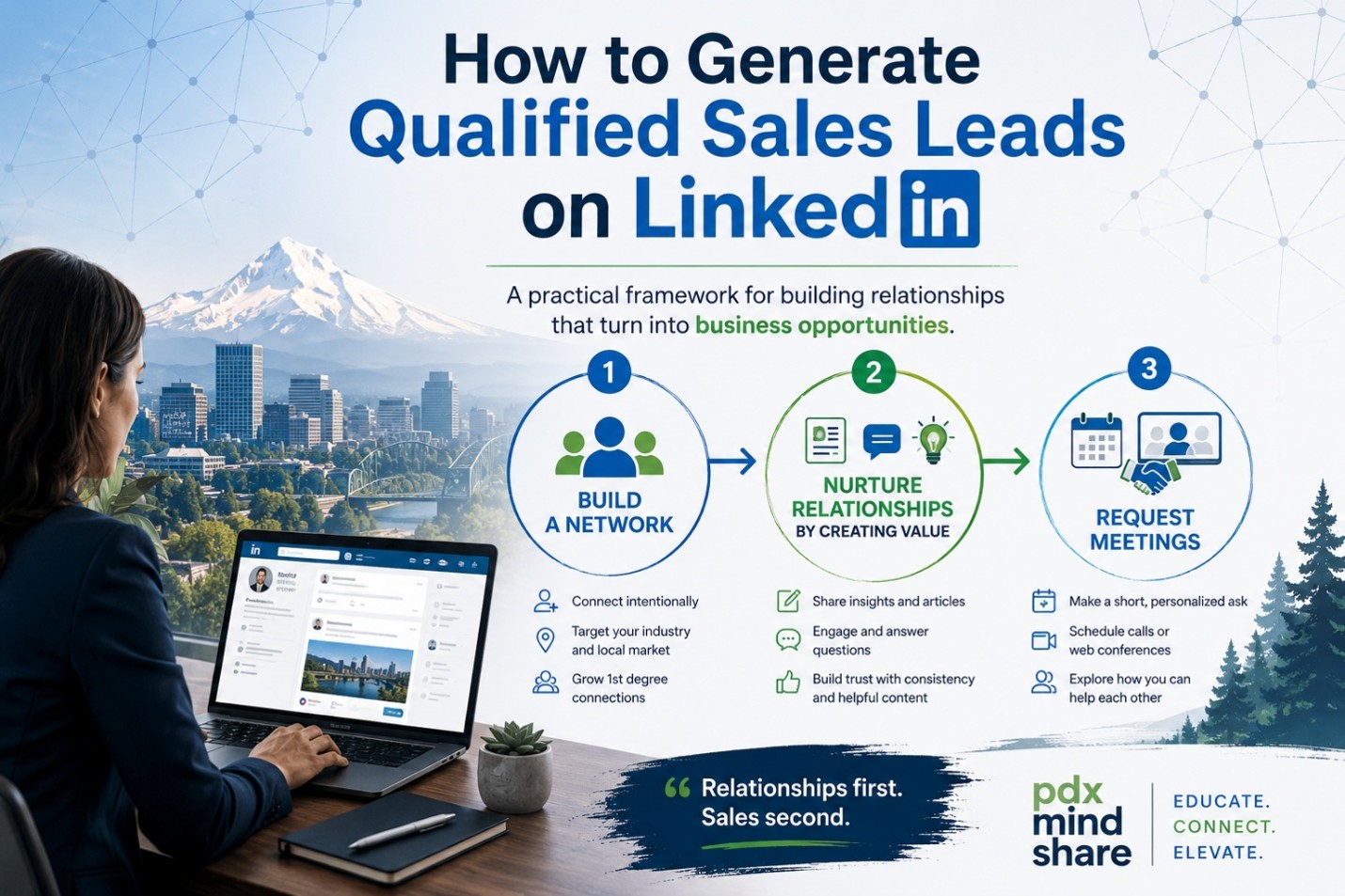
While LinkedIn provides excellent targeting options with its advertising platform and the premium subscriptions expand LinkedIn’s power for sales and HR professionals, I’ve relied on my basic account, which is free. Keep that in mind as you read this article, as my approach works for all levels of LinkedIn access, but my goal is to be as inclusive as possible. While my 3-step approach is not revolutionary by any means, it is both simple and effective: 1. build a network, 2. nurture relationships by creating value, and 3. request meetings.
Build a Network
To close deals, you need to make “the ask,” but before you can do that, you must have someone to ask. I’ve found the best way to build a valuable network is to cast a wide (yet intentional) net. Building a network takes time and effort, especially to build a relationship. It all starts by making connection requests to create a robust network of 1st degree connections. I recommend starting with 2nd degree connections, as you have more credibility and greater odds of acceptance (than 3rd degree connections). I’ve found connecting within my local geography (city, state, or region) is most fruitful.
I also craft an optional note to maximize conversion-to-connection. Something brief, like “Since we’re in the same industry and city, I thought we should connect. Let me know how I can help you.” I typically send invitations based on job title or employer on a weekly basis. Daily, I also review suggested connections and send a handful of requests. This is the quantity over quality approach. One guideline to consider when sending connection requests to suggested contacts is: the more mutual connections, the greater the likelihood of accepting an invitation.
Nurture Relationships by Creating Value
While many sales professionals feel the immediate desire to make a pitch within an initial connection request, I advise against it. Primarily based on my personal experience on LinkedIn and in my career, I’ve found aggressive salespeople to be a huge turnoff, virtually killing the deal before it can blossom. Instead, I recommend adding in a crucial interim step: building a relationship. For a decade, I posted hourly on my LinkedIn feed (I’ve since reduced velocity significantly).
Regardless of post frequency, posting regularly increases the probability of a new connection seeing my posts and giving me an opportunity to generate top-of-mind awareness and trust. I curate my posts carefully, with a mix of my own articles, events, and insights as well as timely (digital marketing) industry news. I also evaluate new features like LinkedIn Polls and monitor Groups regularly. My goal is to answer questions, provide thought-leadership content and value to my growing network on LinkedIn. I’ve found consistency trumps quality, in terms of regular posts, LinkedIn articles (blog), and Groups posts.
Request Meetings
The last step, once a relationship is built, is to make an ask to meet. I’ve found scheduling calls or web conferences is far more productive and well-received than a standard pitch with a link or document as the call-to-action. I personally ignore all documents and links from inbound pitches (typically In-mail) myself, and feel many executives do the same. Keep in mind, I’ve ideally had multiple touch points with any given prospects, via the feed, as well as congratulating them on a promotion, birthday, or new job.
Your history with any contact can be seen in the Messaging section and is a helpful record of your interactions (particularly for basic accounts). I also go against my own desires and create a noticeably short ask in Messaging, like “We’ve been connected for some time now, and I thought it would be prudent to get time on the calendar to explore how we can help each other. Let me know your availability in the next week or so for a quick call.” This effort led to securing the largest client in Anvil’s 21-year history in 2018.
Leveraging Tools & AI
Since LinkedIn launched in 2003, I’ve invested time both posting regularly and sending connection requests to build my network and visibility. In just the past year, I started leveraging a tool to automate outreach efforts. I’ve found Meet Alfred provides an optimal mix of functionality and affordability (combined with LinkedIn Navigator) to grow my network and relationships. Note that some tools can violate LinkedIn terms and conditions and generally they lack efficacy due to broader adoption.
Many LinkedIn members are jaded by the influx of automated connection requests and pitches, so you must have a personalized and thoughtful outreach plan. If you need help creating a plan, I highly recommend tapping an expert like Lissa at Cheerful Persistency. Irrespective of your sales plans, motivations, or accountability strategy, the most important insight from this article is to take the first step.