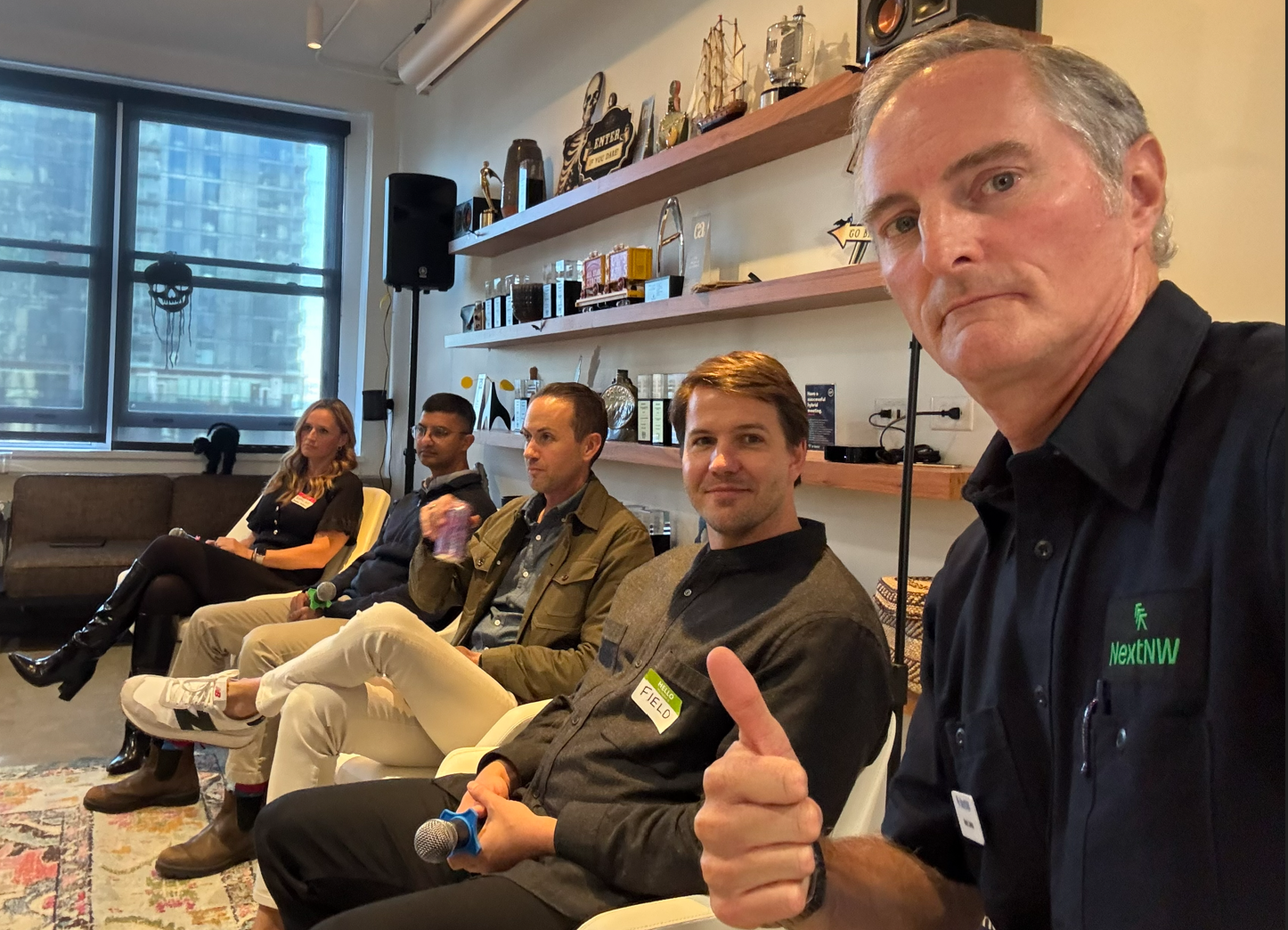
I was recently asked to sit on a career panel for the Western Washington University College of Business & Economics’ Marketing Program. As an advisory board member for the Marketing Department for years, I’m always looking for ways to give back to the school and next generation of students. To prepare for the panel, I thought about what I wish I could tell myself as a 22-year-old graduating senior. I’ve shared my best advice for graduating seniors below and hope it helps!
Leverage school resources
One of the greatest regrets of my early career was failing to take advantage of resources provided by WWU. Most importantly, I didn’t seek any internships while in school, so I missed both an opportunity to gain experience while earning credits. Instead, I accepted a full-time, 3-month internship after graduating that paid virtually nothing. While the experience was valuable, I felt like I lost 3 months by not doing it before I graduated. I also highly recommend students take a Career Readiness class to help prepare for life after school prior to graduating.
Tap your network
While I can safely say I built my career nearly from scratch, forging my own relationships, skills, and even roles, I didn’t do it alone. Western provided a critical foundational education; the critical starting point of my agency career was an introduction my mother made to a board member of the non-profit at which she worked. I met the Account Supervisor, which resulted in landing my first internship after graduating. That foundational resume-builder led me to a career in public relations in Portland. Don’t be afraid to ask family, friends, instructors, or even professionals you’ve targeted on LinkedIn for a meeting or a key introduction.
Dial in LinkedIn
If a successful career is your goal, you simply must have an optimized LinkedIn profile. There are many resources that can guide you to a polished profile, as well as other tools and strategies to grow your network. I’m a huge fan of building your reputation as a thought leader. Smart employers hire future leaders, whether of a discipline or of people. With nearly 30,000 LinkedIn connections myself, I’ve utilized the platform to recruit, as well as land the largest client of my career. You can and should do the same.
Discover and leverage your strengths
During my time at Western, I created a mission statement: To educate, entertain, and connect. While I still make decisions based on my mission, I find it somewhat ironic I wasn’t truly able to educate or connect while a student, as I didn’t have the knowledge or the network. The good news is that I was able to leverage my strengths as an enthusiastic communicator over the years to deliver on my mission. The sooner you identify and harness your strengths, the happier and more productive you will be.
Set (and reset) goals
One of the greatest accomplishments of my career was helping one of my first employees (a recent graduate) grow to Vice President at my agency while purchasing her first home. I don’t recall the moment, but she did. After seven years working together, she informed me she purchased a condominium and thanked me for the inspiration. Apparently, I told her within her first few weeks in her first career job to set goals. She did, and she accomplished that goal. I shared my advice with her based on my own experience with goal setting, but it was far more rewarding to be a part of her major milestones. You can and should do the same and start by mapping your strengths and interests to your personal and professional goals.
Never stop networking
I moved to Portland in 1995 and knew one person: my cousin. Through years of networking, I now know hundreds of people and am connected to thousands of area professionals on LinkedIn. It all started by getting to know my coworkers at my first job, and I never stopped meeting new people. In fact, I started my own professional networking group in 1999, pdxMindShare, which dramatically increased the size and strength of my network. I also utilized a specific strategy of trying to help every new person I met in professional situations. Nurturing a network is like farming, so never stop curating and caring for your network, and it will pay dividends.
Never stop learning
There are two mindsets: fixed and growth. While your default may be fixed (I was born this way, and that’s that), you can always embrace the growth mindset. In my career experience, I’ve never met a successful fixed mindset person. The most successful professionals I know embrace the growth mindset. Despite having the financial resources to retire, a few of my entrepreneurial friends still work hard and look for opportunities to gain experience and grow. That only compounds their success. You are what you believe and the sum of what you know. Never stop learning and growing.
Don’t think you are special; show it
One of the challenges I faced as a business owner 10-15 years ago was the Millennial Mindset. The concept of the “I’m special” entitlement, due to cultural changes in parenting and education. I found it exceedingly difficult to motivate Millennial-age employees and was quick to deride them all as lazy and soft. That was a mistake, however. I eventually gained clarity that the Millennial Mindset can be detrimental, but it is not age or generation-specific. I was able to find smart and driven young professionals, but I also dealt with older (Gen X) employees who defined the Millennial Mindset. I promoted high performers and pushed out those of any age who were infected by the Millennial Mindset. Don’t enter the workforce thinking you’re special. Demonstrate it by leveraging your strengths on a regular basis.
Make AI work for you, or you will work for it
As Executive Director of NextNW, I regularly interface with marketing agency owners and creative professionals. While owners are always looking for ways AI can enhance marketing, creative professionals (especially designers) tend to take a strong stance against AI or at least be hesitant to adopt the technology in their roles. That is both unfortunate and short-lived. If you do not learn how to use AI to amplify your abilities, you will be replaced by someone who does. The example I use is copywriters becoming copy editors or graphic designers becoming art directors. Bottom line, you can use AI as a force multiplier, so start today and give yourself an edge.
Take risks
In 1996, I switched jobs from high-tech PR account executive to marketing manager at a web development sister agency. A few of my PR coworkers were skeptical of my move and saw it as a risk. I saw it differently. The internet was new and exciting with tons of potential. More importantly, I had virtually nothing to lose, as I could always get another PR job somewhere if the web marketing gig didn’t pan out. It ended up being a launch point, allowing me to ride a wave to multiple agency startups as an owner or executive and make a good living. Take big risks early in your career when you have less to lose. Every major career decision is a building block to success. It’s only a failure if you don’t learn from the experience.
Make your money work for you
My uncle borrowed money from his family while in college to purchase his first apartment building. It wasn’t his first and wouldn’t be his last. My parents also purchased an apartment before I was born and owned it for decades. The passive income was critical to augmenting meager salaries at the time. Selling the building created a windfall as well. I learned from watching my family and invested most of my income into real estate. It kept me ‘cash poor,’ but allowed me to build a passive income and a solid foundation for retirement. Invest early and often, so the money will work for you, instead of you working for the money.
If you’re interested in learning more, I’ve shared 30 years of lessons as an entrepreneur and marketer in this curated collection of articles on LinkedIn.